
Beware of AI-Generated Peony Scams
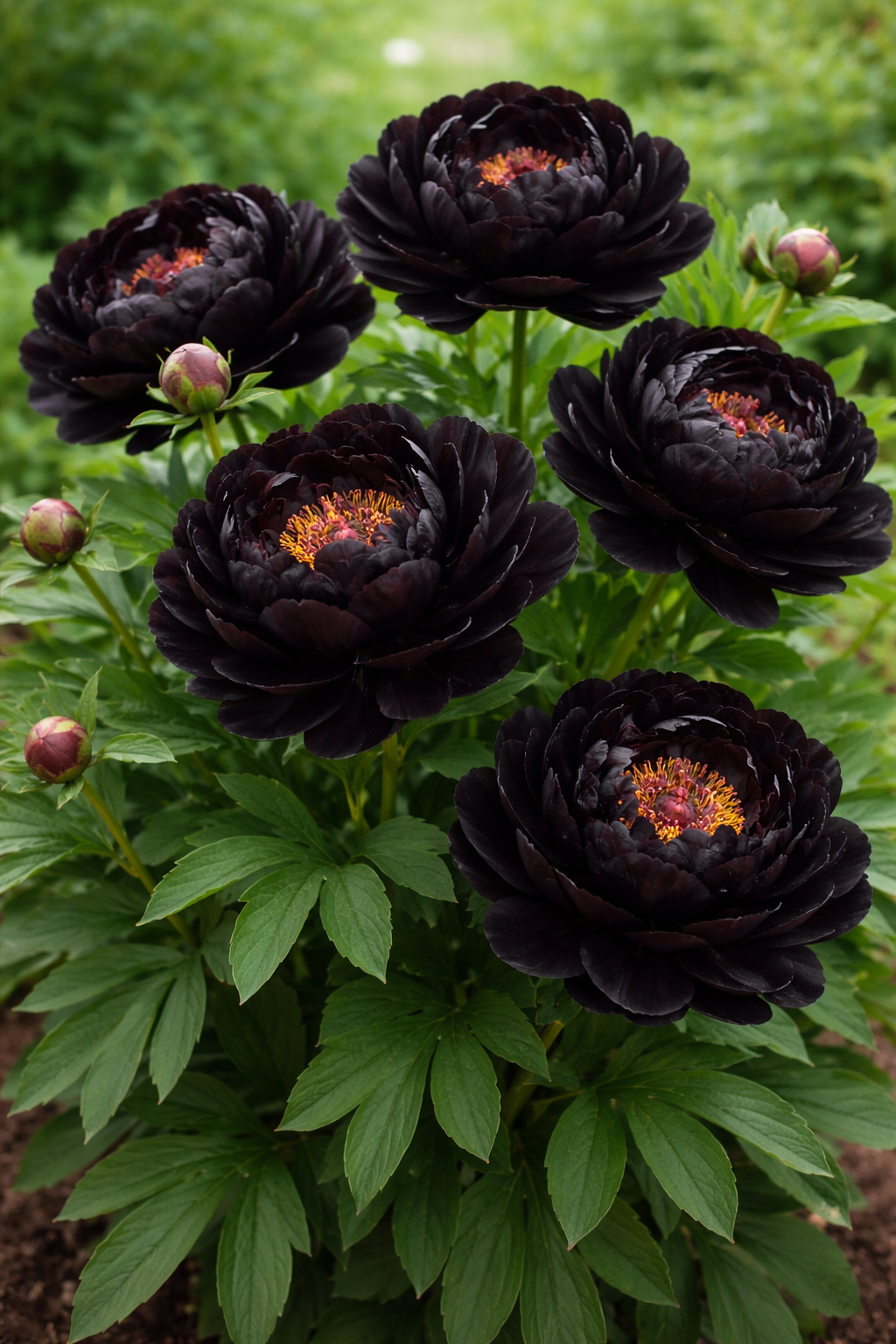
This is an AI-generated peony. Note the unnatural color and perfect symmetry, neither of which occur in nature.
As peony lovers and gardeners search online for rare and unusual varieties, a growing problem has emerged: AI-generated peony images being used to sell fake varieties—especially as seeds. These images are often visually stunning, dramatic, and completely unrealistic, leading buyers to believe they’re purchasing rare colors and forms that simply do not exist in nature.
This practice is misleading, unethical, and increasingly common across social media marketplaces, online ads, and low-quality plant sales websites.
The Truth About “Black” and “Blue” Peonies Let’s be very clear:
There is no such thing as a true black peony.
There is no such thing as a blue peony.
These colors do not exist genetically in peonies.
What does exist are very deep red, maroon, and burgundy peonies that may appear nearly black in certain lighting—but they are not truly black. Similarly, no peony variety produces blue pigment.
About “Black Beauty” Peony: Black Beauty is a registered and legitimate peony variety. However, many images online labeled as Black Beauty have been:
Digitally altered
AI-enhanced
Over-saturated
Darkened to appear unnaturally black
These images misrepresent the real plant and create unrealistic expectations for buyers.
The Seed Scam: Why Peony Seeds Are a Red Flag One of the biggest warning signs is when sellers offer peonies as seeds and promise a specific color or form. Here’s the reality:
Peonies do not grow true to parent from seed.
This means:
You will not get the same flower as the parent plant
Color is unpredictable
Flower form is unpredictable
Bloom quality is unpredictable
You may wait years to see the first bloom
So any seller claiming:
“Black peony seeds”
“Blue peony seeds”
“Rare rainbow peony seeds”
“True color peony seeds”
is making a false claim.
Legitimate named peony varieties are propagated and sold by root division, not seed. Oftentimes, they seeds you receive in the mail, if you receive anything at all, are not even peony seeds!
How AI Is Making the Problem Worse AI-generated images have made these scams far more convincing. These images often feature:
Impossible colors
Unrealistic petal shapes
Over-perfect symmetry
Hyper-saturated tones
Fantasy-like textures
They are designed to trigger emotional buying, not informed gardening.
If it looks too perfect to be real—it probably is.
To Protect Yourself as a Buyer watch for these red flags:
Selling peonies as seeds with guaranteed color
Claims of blue, black, rainbow, or neon varieties
No real nursery name or location
Stock images only (no field photos)
No root photos
No cultivar registration info
No botanical naming
No USDA zone info
How to buy real peonies safely Choose sellers who:
Sell bare root peonies or divisions
Use real field-grown photos
List registered cultivar names
Operate as real nurseries or farms
Provide growing zone info
Educate buyers about expectations
Real peonies are propagated by division, not seeds.
If someone is selling you a peony seed that promises a black, blue, or rare fantasy color—they are not selling a real peony variety.
They are selling an image.
They are selling a promise.
And most often, they are selling disappointment.
Peonies are one of the most beautiful and long-lived plants in the garden—but their beauty is real, natural, and honest. Trust real growers. Trust real plants. Trust real horticulture—not AI fantasy.
Buy roots. Buy divisions. Buy from real growers.
Because in gardening, just like in nature—
If it looks too perfect to be true, it probably is.

American Peony Society Gold Medal and Award of Landscape Merit Winner!
Peony Buckeye Belle always amazes people with it's deep mahogany, black-red, cup shaped semi-double flowers. It is a wonderful hybrid blooming very early. The cup shape holds a center of gold to accent the dark flower petals. Top notch cut flower and very nice foliage all season long.
The 30" stems hold the flowers upright without any additional support making it a great choice for landscaping. Fantastic dark green upright foliage adds to its neat appearance in the garden.
Bloom date rating is week 4.
Registered: Mains, 1956
3-5 eye roots are shipped or available for pickup in fall.