
Before You Plant Your Potted Peony… Read This
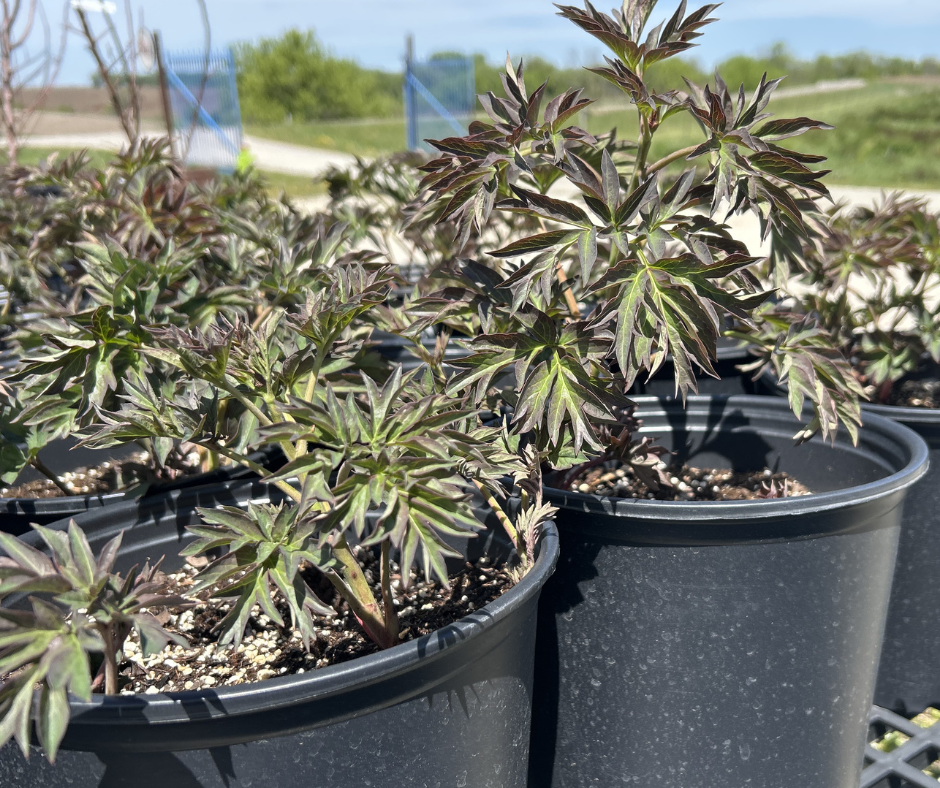
Planting Instructions for Your Potted Peonies
Plant as soon as possible! While potted peonies can remain in their containers for a short time, they will establish best when planted promptly. If you are unable to plant soon, keep the pot outdoors in a partly shaded location and water as needed to prevent the soil from drying out completely. Avoid leaving pots sitting in standing water.
Selecting a Planting Site Select a well-drained site with rich, well-aerated soil that receives sun for most of the day. At least 10 hours of sunlight is best for stronger stems and abundant blooms. More sunlight is better! Avoid locations where competing tree and shrub roots will rob the plant of moisture and nutrients. Remember peonies are large plants, and each plant should be spaced about 36" from the center of neighboring plants.
Avoid Wet Locations! Never plant in a low spot where water will stand, as this can kill your peony. Peonies have very little tolerance for wet soils. Never use plastic mulch, which can suffocate the roots. Stone mulches and landscape fabric are also not recommended for peonies.
Preparing the Soil Most soils require few amendments for peonies. In very sandy soil, add compost at a rate of one part compost to every three parts soil and mix thoroughly. In clay soils, add one part compost to every three parts clay soil and slightly mound the planting area to improve drainage. Raised beds with 12–18" of additional well-drained soil are excellent for peonies.
Fertilizer Although not always required, you may use bone meal or a bulb fertilizer at planting time according to the package instructions, being careful not to let fertilizer directly contact the roots. Mix fertilizer evenly throughout the backfill soil. Never place concentrated fertilizer directly into the planting hole, as it can damage the plant.
Planting Your Potted Peony Dig a hole slightly wider and about the same depth as the pot. Carefully remove the peony from its container, disturbing the roots as little as possible. Place the plant in the hole so the soil level in the pot matches the surrounding garden soil surface. Planting too deeply may reduce flowering. Backfill gently but firmly around the root ball.
We do not recommend growing peonies long term in containers, as they perform best when planted directly in the ground.
Watering is Critical Water thoroughly immediately after planting to eliminate dry pockets of soil around the root ball. During the first growing season, water deeply during extended dry periods. Newly planted peonies should not be allowed to dry out completely while establishing. Watering is most important in spring during active growth and in fall when new roots are forming.
Winter Mulch the First Year Only and Remove Very Early in Spring In areas with clay soils prone to freeze-thaw cycles, winter mulch is especially important during the first year to prevent plant heaving. After the ground has frozen, apply a light mulch for winter protection. Remove the mulch very early in spring—around April 1st in colder regions, or as soon as the ground begins thawing and growth emerges. Peonies begin growing very early in spring, and mulch left on too long may trap excessive moisture and contribute to rot. Peonies are far more tolerant of cold than they are of soggy conditions.
Please reach out with any questions you have. We’d also love to have you visit the farm and see where your peony has grown!
Laura Kubes
Hidden Springs Peony Farm
Laura@HiddenSpringsPeonyFarm.com
763.218.4540 (call/text)