
Spot signs of fungus on your peonies
Fungus Season for Peonies
As summer heat, heavy dews, and humid weather settle in, July and August become prime time for fungal diseases on peonies. By now the flowers are gone, but the foliage is still hard at work producing energy that will fuel next year's blooms. Keeping those leaves healthy now means stronger, healthier plants next spring.
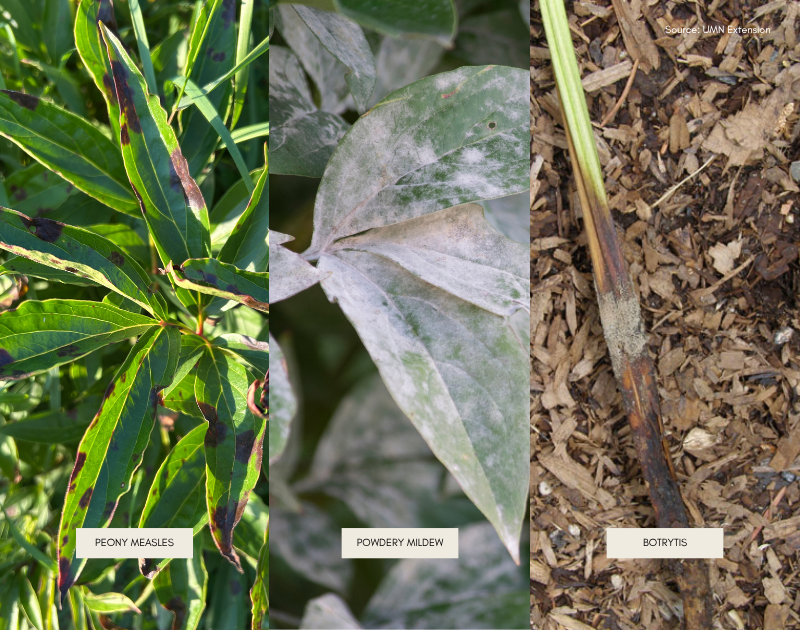
The three fungal diseases gardeners are most likely to encounter are powdery mildew, botrytis, and peony measles (also known as peony blotch, leaf blotch, or red spot).
Powdery Mildew is by far the most common. It appears as a white or gray powdery coating on the leaves and is most common during warm, humid weather. While it rarely kills a peony, severe infections reduce the plant's ability to photosynthesize, weakening the roots and potentially reducing next year's bloom production.
Botrytis (Gray Mold) usually begins as brown or black spots on leaves and stems and may develop a fuzzy gray mold during wet weather. It is most common in spring but can continue to spread throughout humid summers, especially on crowded plants with poor air circulation.
Peony Measles (Leaf Blotch or Red Spot) causes small reddish-purple spots or flecks on leaves, stems, and petioles that often enlarge into irregular purple or chestnut-brown blotches. In humid weather, olive-colored fungal spores may be visible on infected tissue. Although peony measles is one of the most common peony diseases in the United States, it is usually more cosmetic than life-threatening. However, repeated infections over many years can weaken plants if left unmanaged.
Prevention is Your Best Defense
Fortunately, the prevention methods for all three diseases are nearly identical:
Plant peonies in full sun with plenty of space for good air circulation.
Water at the base of the plant rather than overhead.
Remove and discard infected leaves and stems—never compost diseased foliage.
Sanitize pruners between plants.
Cut all peony foliage to the ground in the fall and remove it from the garden to eliminate fungal spores that overwinter on old plant material.
If disease becomes severe, an organic copper fungicide labeled for ornamental plants can help slow the spread. For light cases of powdery mildew, many gardeners also have success with a homemade spray of 1 tablespoon baking soda per gallon of water or 1 part whole milk to 9 parts water. These treatments are generally more pollinator-friendly than traditional fungicides but work best when infections are caught early.
I’m also experimenting with a bio-fungicide here on our farm as a preventative. This is a natural bacteria that prevents fungal infections before they take hold. The brand is Arber, which is widely available.
The good news is that most fungal diseases on peonies are manageable. With good sanitation, proper spacing, and plenty of airflow, your peonies can continue storing energy through the rest of the growing season and reward you with another spectacular display next spring.
If you have a peony that is regularly infected, treatment can begin in early spring right when the shoots emerge. The spray should be continued regularly every 1-2 weeks throughout the growing season.
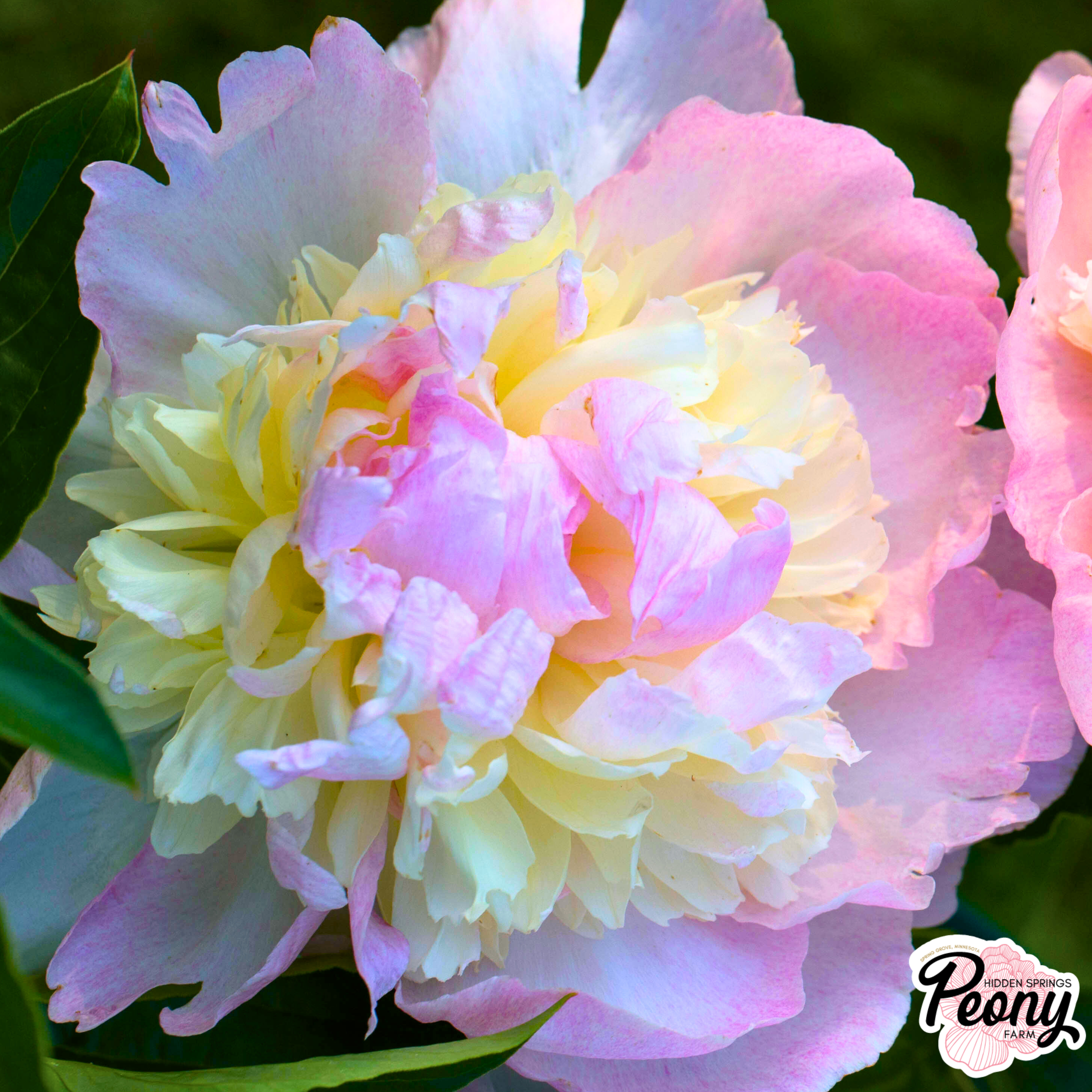
Peony Raspberry Sundae is a double bomb for peony. Blooms are a combination of soft raspberry and cream blend for a tri-color effect. This beauty blooms mid season with a sweet fragrance.
With 36" tall stems it is great for cutting. I would advise staking it in a garden setting as the generous blooms stress the strength of the stems.
Week 5 bloom date rating.
Registered: Klehm, Carl G., 1968
3-5 eye roots are shipped or available for pickup in fall.