
Growing Peonies in Clay Soil: Tips for Success
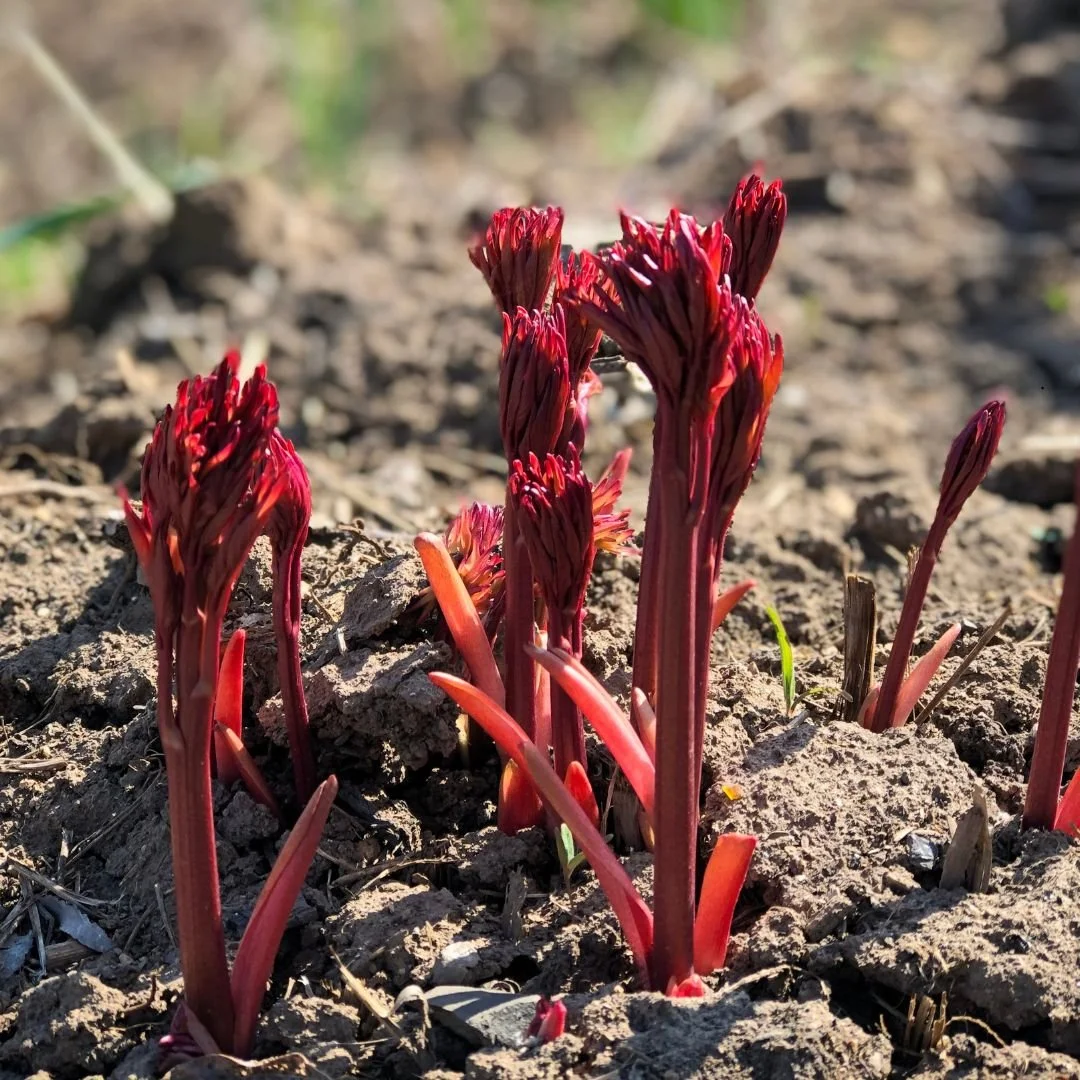
Today’s topic comes courtesy of a customer question I received this week about planting peonies in clay soil.
Many gardeners assume that peonies cannot be grown in clay soil, but that simply isn't true. In fact, peonies can thrive in clay if the soil is managed properly. Clay soil presents some unique challenges, but with a few adjustments, gardeners can enjoy healthy plants and beautiful blooms for decades.
Understanding Clay Soil
Clay soil contains very small soil particles that pack tightly together. This gives clay several distinct characteristics:
Advantages of clay soil:
Holds nutrients well
Retains moisture during dry periods
Provides strong support for large, long-lived plants
Disadvantages of clay soil:
Drains slowly
Becomes compacted easily
Can remain cold and wet in the spring
May contribute to root rot if plants remain saturated
Because peonies dislike standing water, drainage is the biggest concern when growing them in clay.
Choose the Right Planting Location
Location is often more important than the soil itself.
Select a planting site that:
Receives at least six hours of direct sunlight each day
Is not located in a low area where water collects
Has good air circulation
Is away from downspouts and areas that remain wet after rain
After a heavy rainfall, pay attention to where water sits in your landscape. If puddles remain for more than 24 hours, choose another location.
Avoid the Common Mistake of Digging a Deep Hole
Many gardeners try to improve clay soil by digging a large planting hole and filling it with rich garden soil or compost. Unfortunately, this can create a "bathtub effect."
Water drains through the amended soil until it reaches the surrounding clay. Since the water cannot move easily through the clay, it collects around the roots and creates a constantly wet environment.
Instead of replacing all of the soil, work organic matter into a much larger area around the planting site so the transition between soils is gradual.
Plant Peonies Slightly Higher
One of the best ways to grow peonies in clay soil is to plant them slightly above ground level.
For bare root peonies:
Position the eyes only 1 to 2 inches below the soil surface.
Mound the surrounding soil slightly to elevate the root.
Avoid planting too deeply.
Planting too deeply can reduce flowering, while planting too deeply in clay can increase the risk of rot.
Consider Raised Beds
If your soil is extremely heavy, raised beds can be an excellent solution.
Raised beds:
Improve drainage
Warm more quickly in the spring
Reduce soil compaction
Allow better root development
Even raising the planting area by 6 to 8 inches can make a significant difference.
Add Organic Matter Carefully
Compost can improve clay soil, but more isn't always better.
Good additions include:
Compost
Shredded leaves
Aged bark
Avoid using large amounts of fresh manure around peonies. Excessive nitrogen can encourage lush foliage while increasing the risk of diseases such as botrytis.
Water Less Than You Think
Clay soil holds moisture much longer than sandy soil. Newly planted peonies still need water, but overwatering is a common mistake.
Before watering, check the soil several inches below the surface. If it still feels moist, wait another day or two.
Established peonies are remarkably drought-tolerant and often require less supplemental water than gardeners expect.
Be Patient
Peonies are incredibly resilient plants. Even in less-than-perfect soil, they often adapt and improve over time.
The key is providing adequate drainage and avoiding excessive moisture around the roots.
Many of the most spectacular peony gardens in the Midwest are planted in clay-based soils. With proper planting techniques and a little patience, clay soil doesn't have to be a limitation. In fact, it may become the foundation for peonies that thrive for generations.